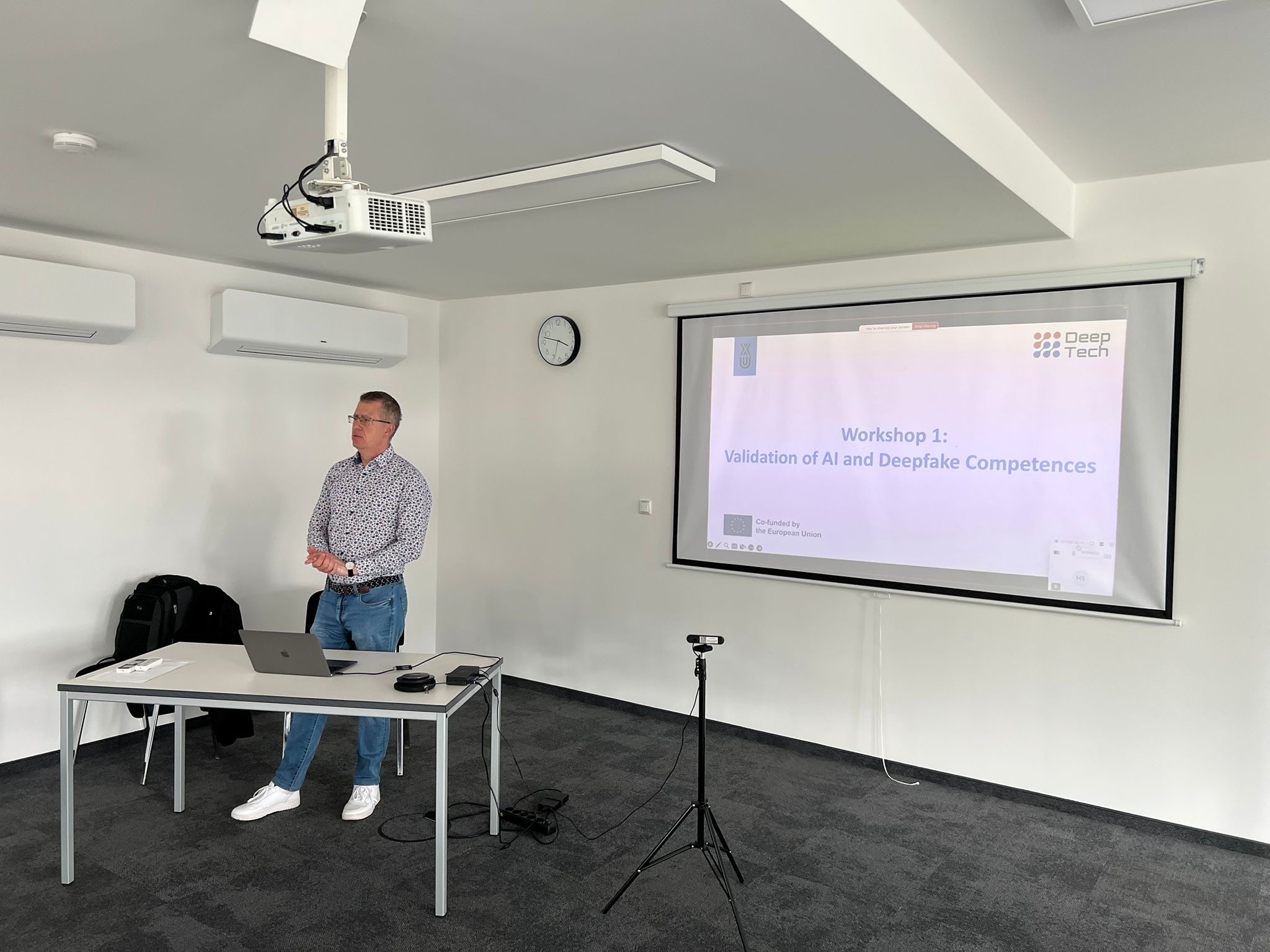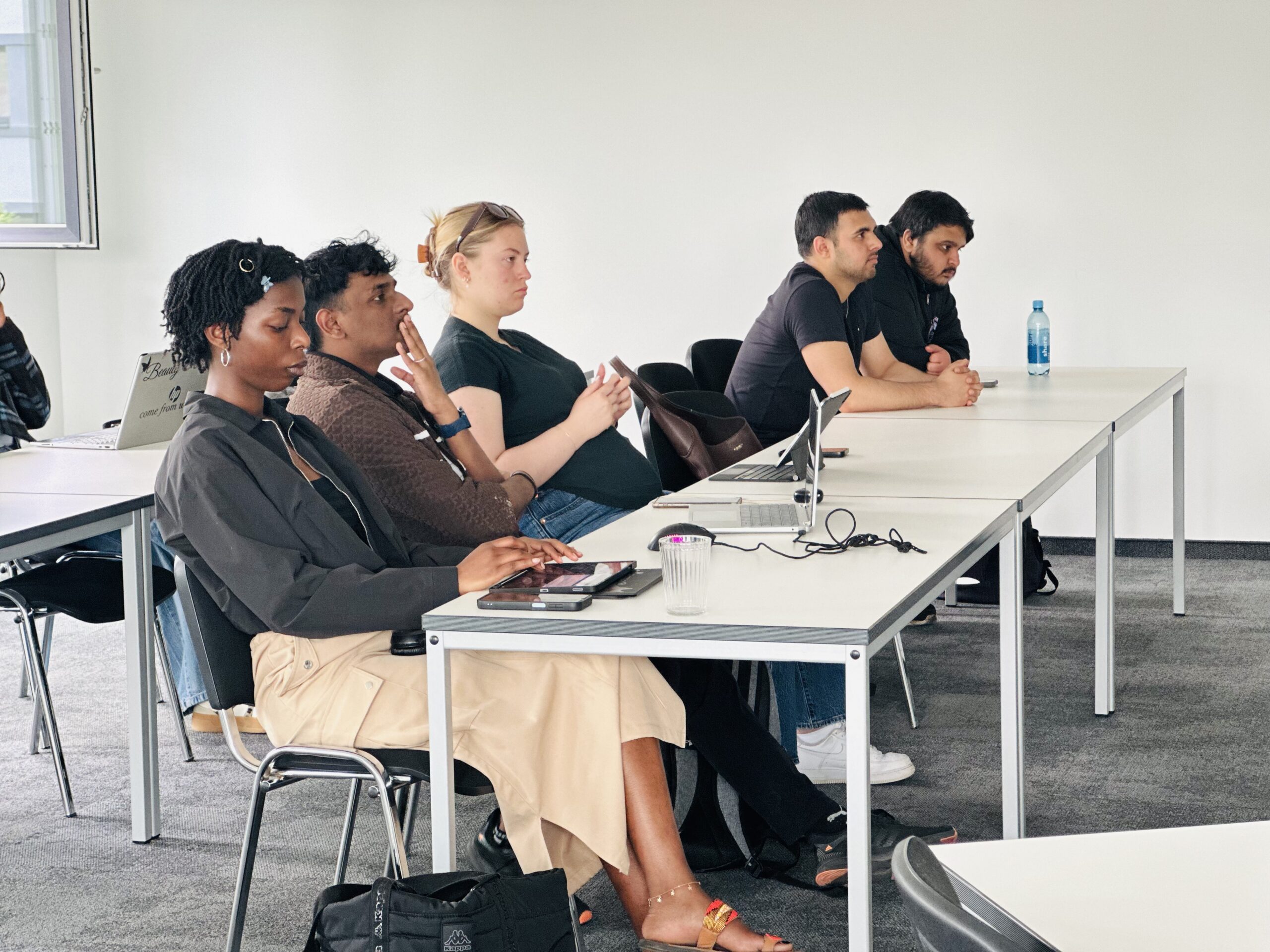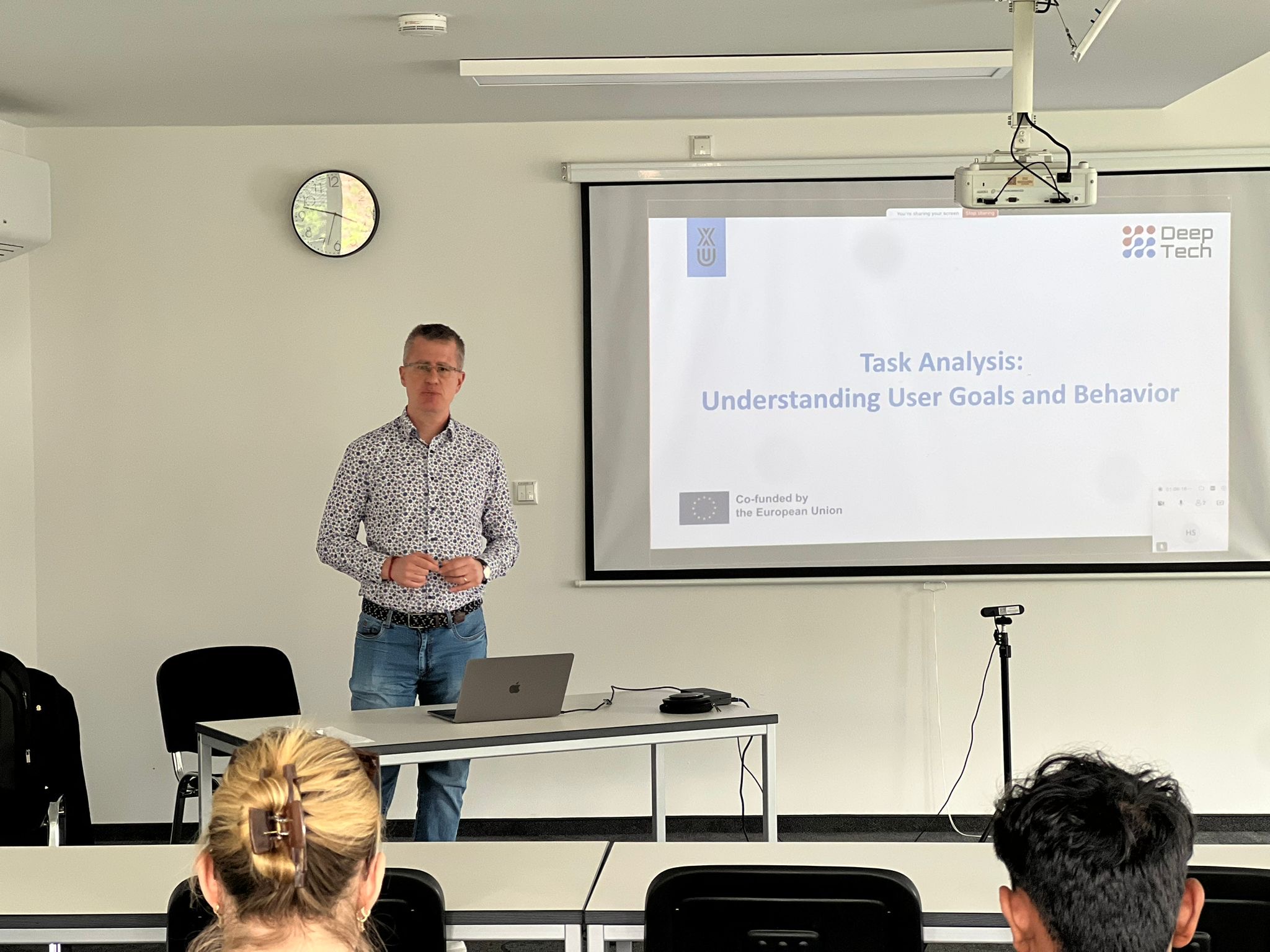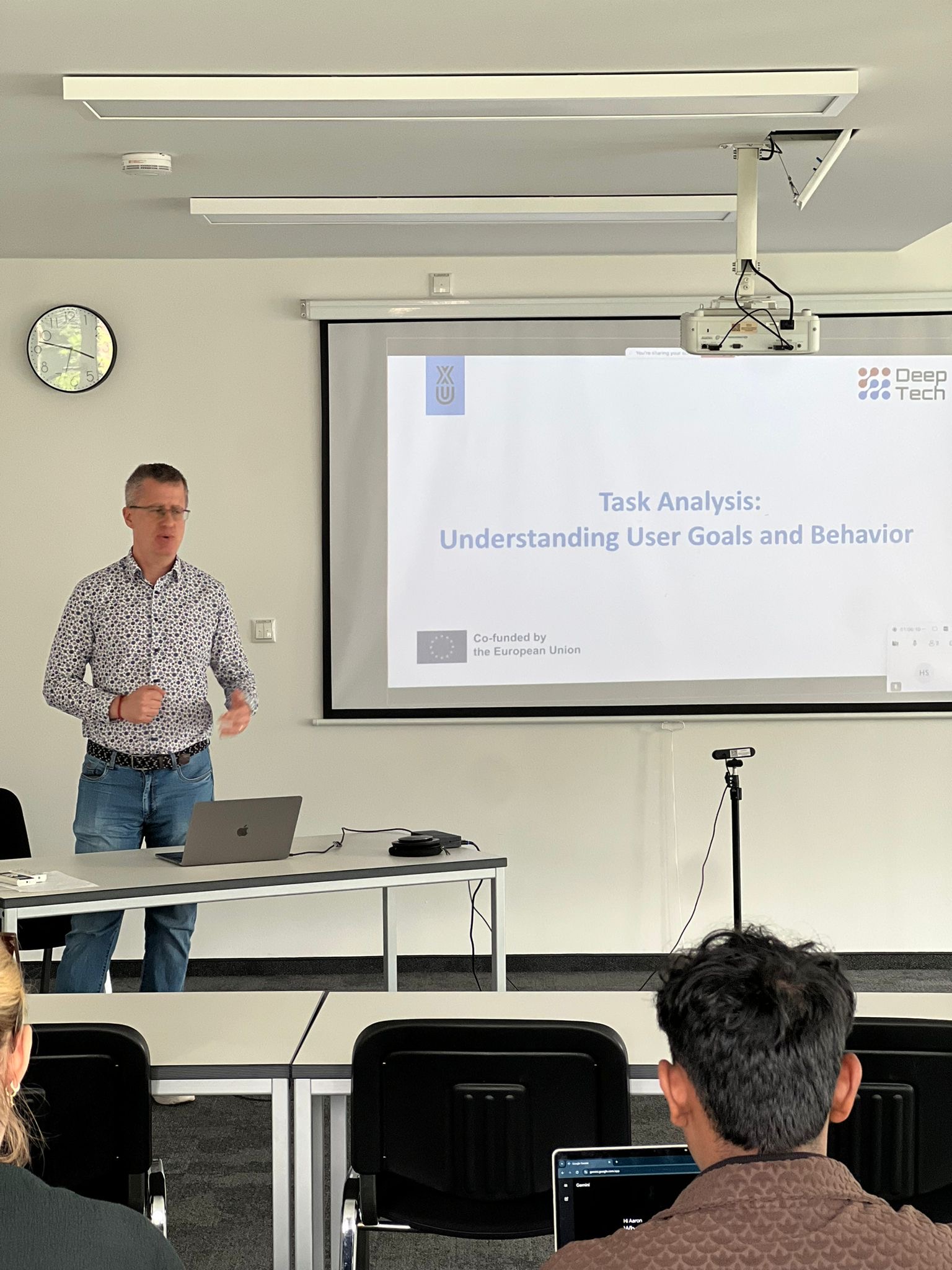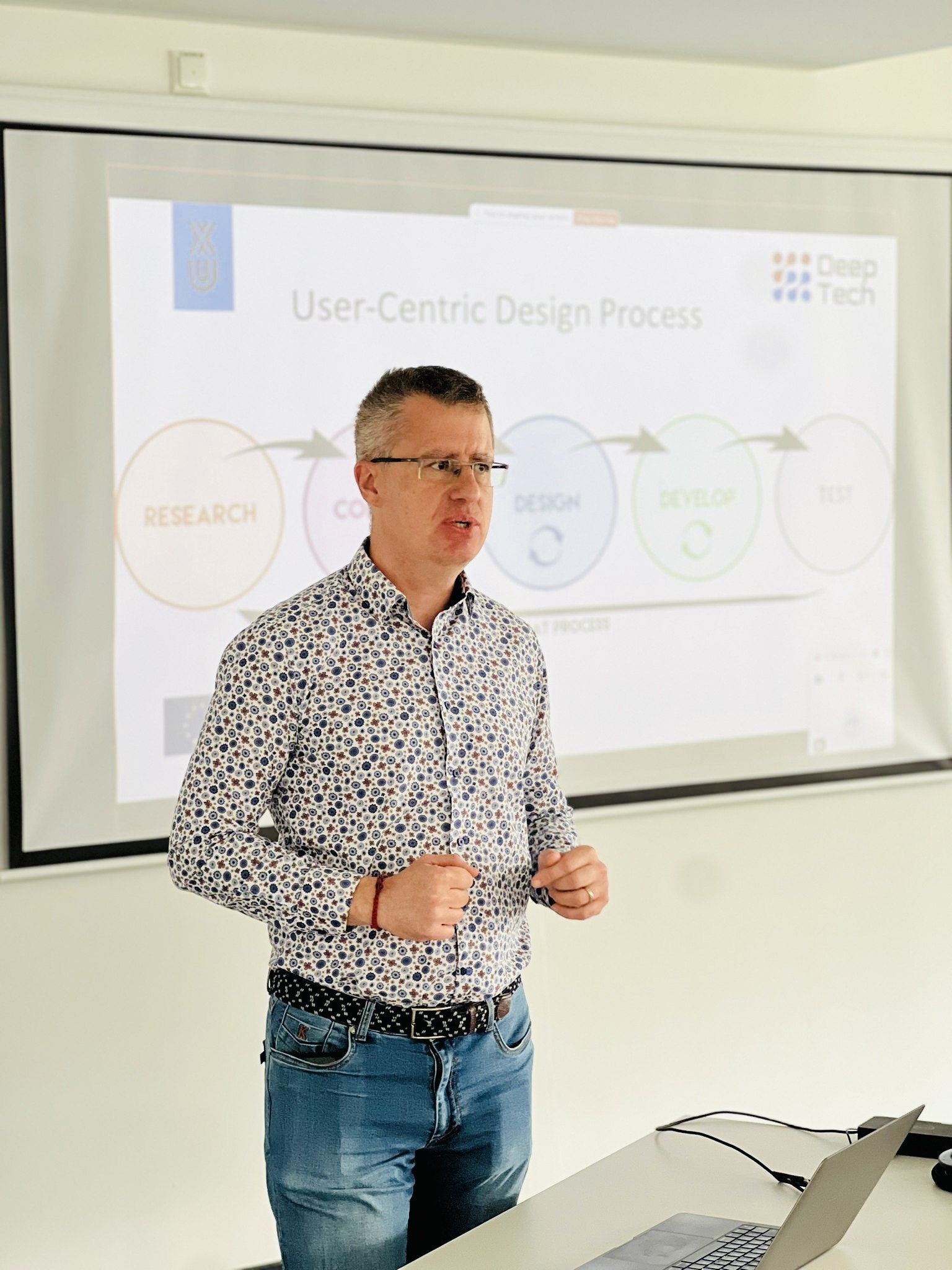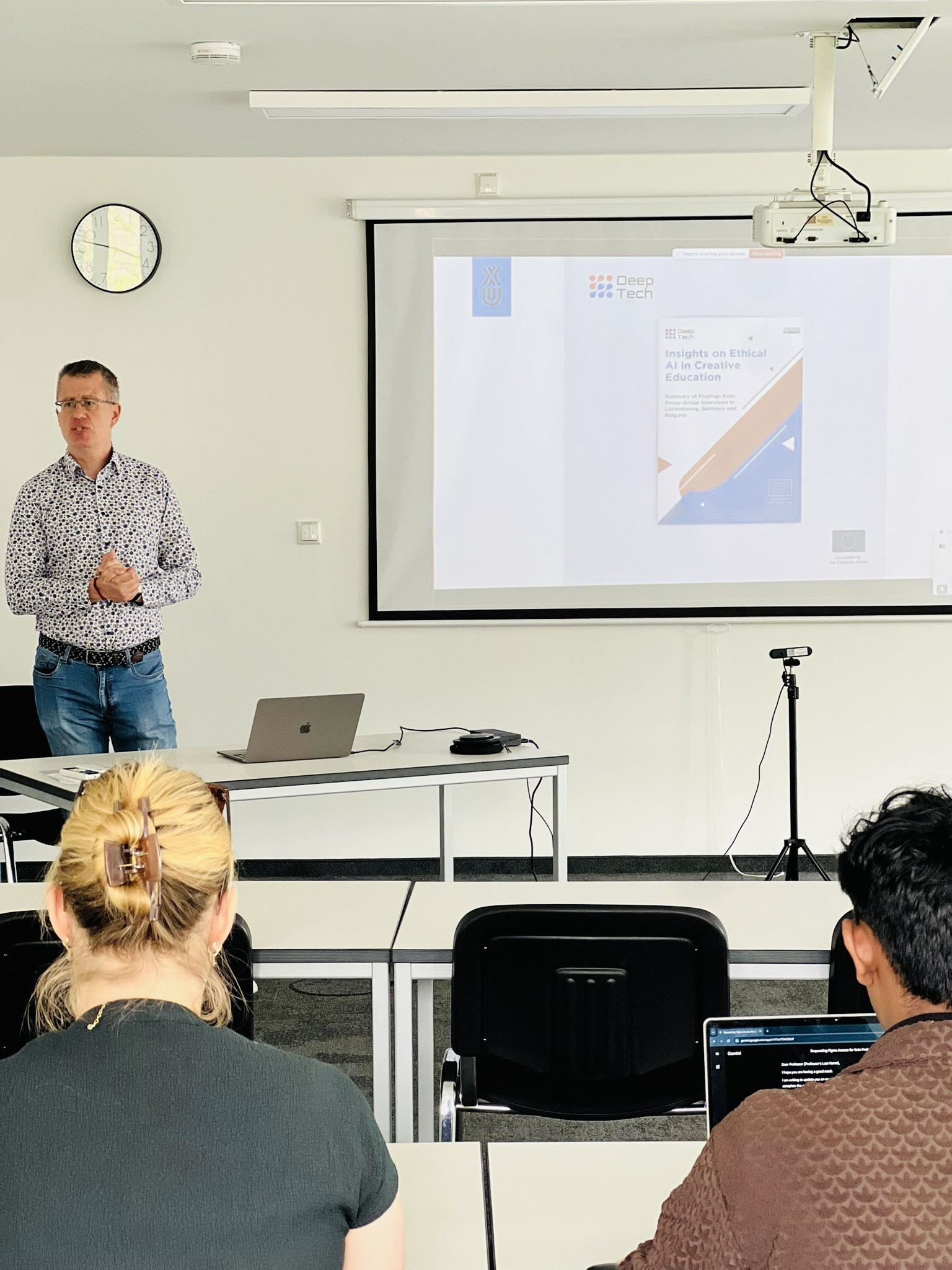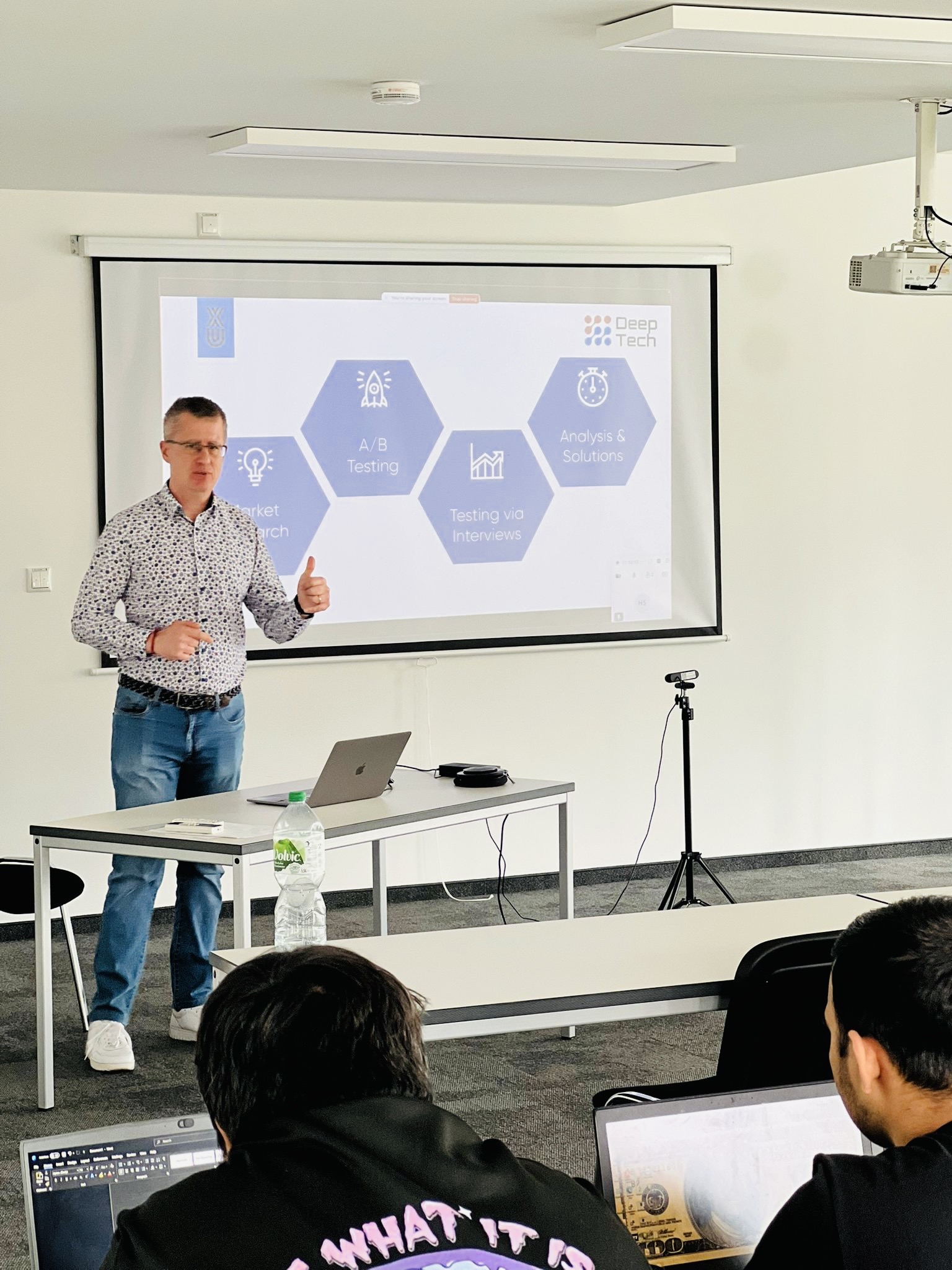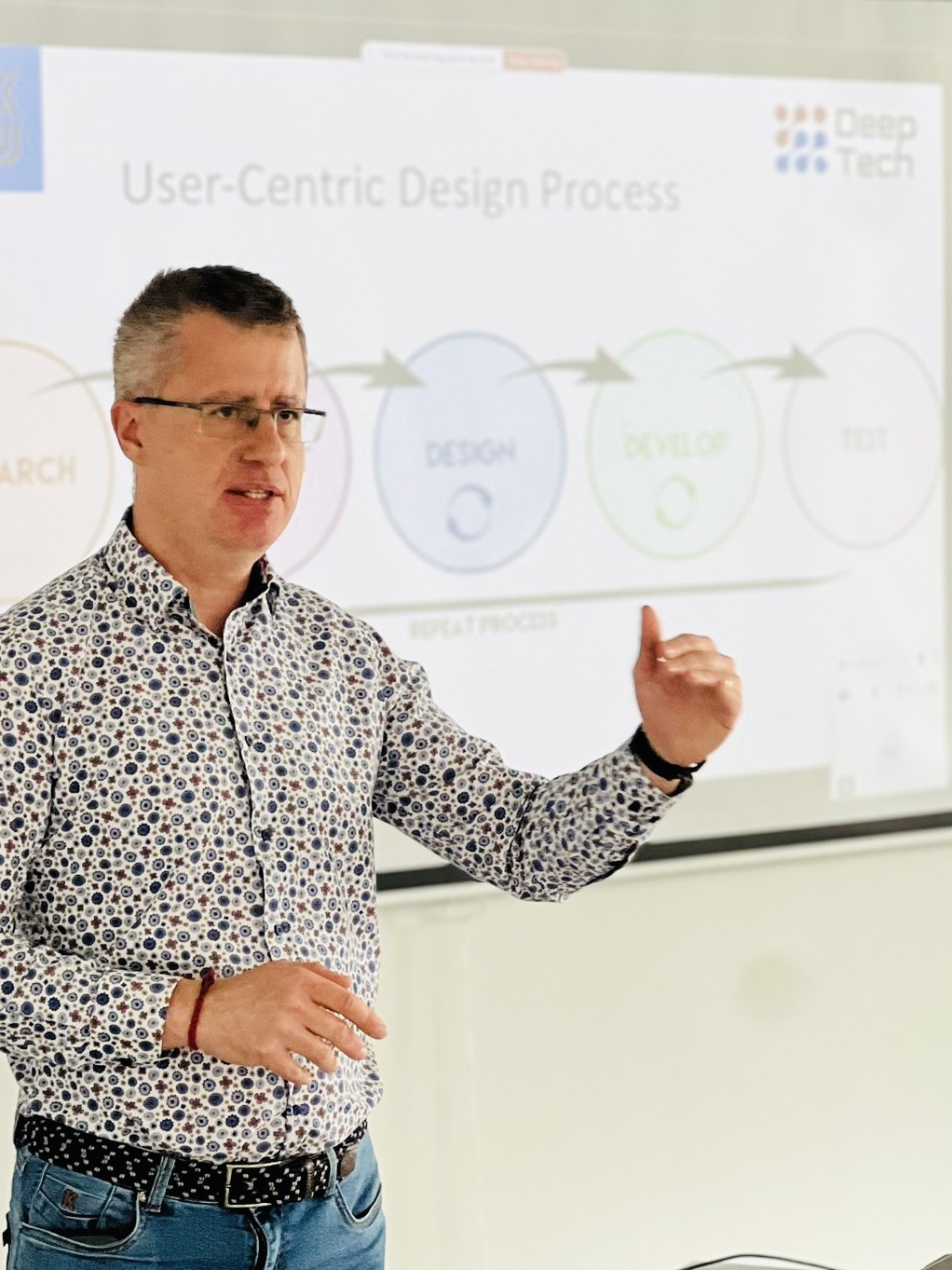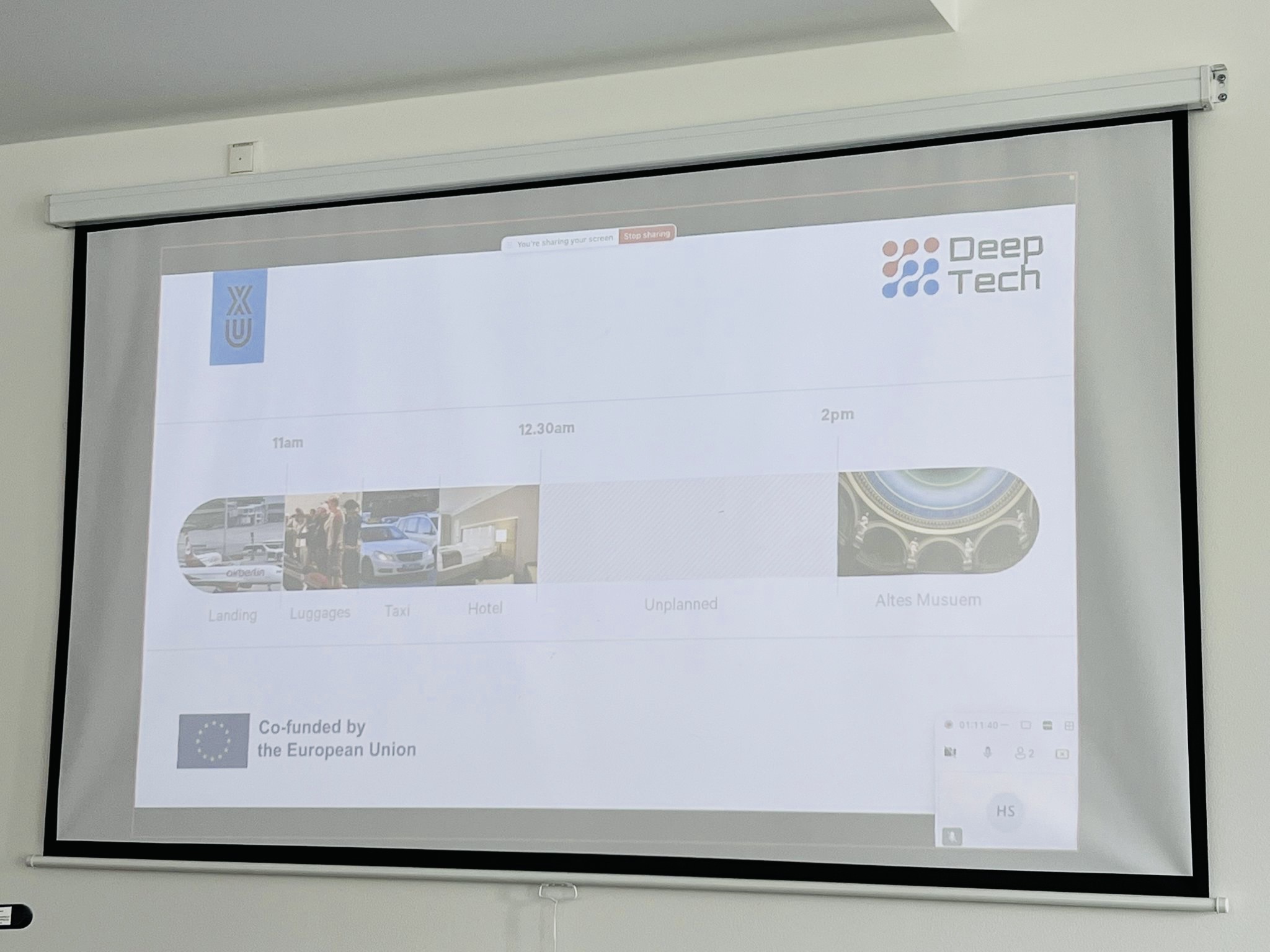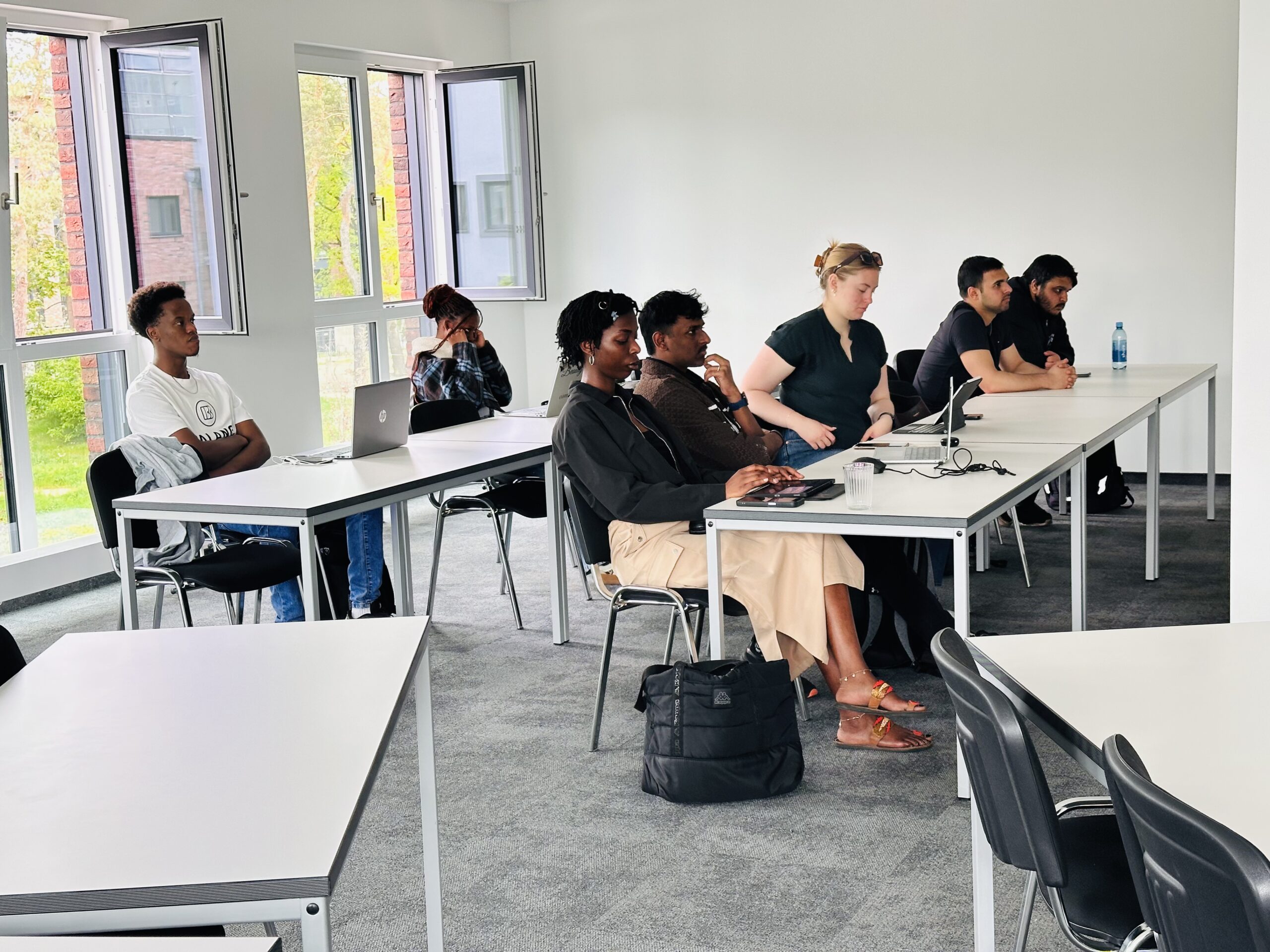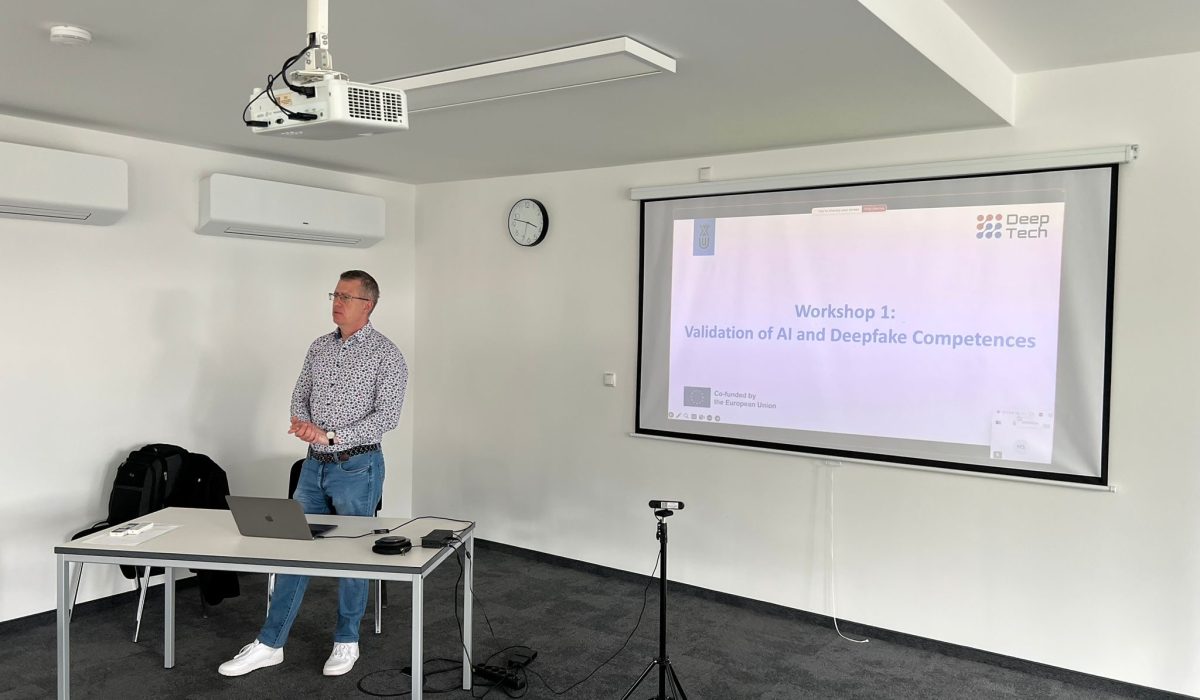
The Erasmus+ co-funded project DeepTech for Creative Trust: Countering Deepfakes and Enabling Ethical AI in the Audio-Visual Industry reached another important milestone with the successful delivery of Workshop No. 1 in Potsdam, Germany. Organised by XU Exponential University of Applied Sciences at its campus in Potsdam, the workshop formed part of Activity 2 – Piloting and Producing Educator Resources, supporting the validation of the project’s innovative training programme while strengthening AI competences among educators and professionals.
The workshop welcomed 12 participants, representing higher education, vocational education and training (VET), digital media, communication, creative industries, and lifelong learning organisations. Throughout the day, participants actively engaged with the newly developed educational resources, contributing valuable insights that will further enhance the project’s final training programme.
Bringing Responsible AI Education into Higher Education
As one of the project’s academic partners, XU Exponential University of Applied Sciences hosted the workshop to validate the pedagogical quality and practical relevance of the “Ethical AI for Creative Trust” training programme.
The workshop introduced participants to the rapidly evolving landscape of Generative AI, synthetic media, and deepfake technologies while promoting responsible and ethical AI adoption across creative and educational environments. Special emphasis was placed on strengthening critical thinking, media verification, transparency, and trust in digital communication.
The workshop directly supports the project’s ambition to equip educators with practical competences that can be immediately transferred into classrooms, professional training environments, and lifelong learning initiatives throughout Europe.
Target Audience
The workshop was specifically designed for professionals who play an active role in educating future digital and creative talent, including:
- Higher Education lecturers and researchers
- Vocational Education and Training (VET) educators
- Digital media and communication professionals
- Creative industry practitioners
- Learning designers and instructional developers
- Researchers working in Artificial Intelligence, media literacy, and digital transformation
- Professionals involved in continuous professional development and lifelong learning
By bringing together participants from multiple disciplines, the workshop encouraged interdisciplinary collaboration and fostered meaningful discussions on the opportunities and challenges surrounding responsible AI adoption.
Interactive Learning and Practical Validation
Throughout the workshop, participants explored practical case studies, collaborative learning activities, and real-world examples demonstrating both the opportunities and risks associated with Generative AI and synthetic media.
The highly interactive format encouraged participants to critically analyse AI-generated content, discuss ethical dilemmas, and evaluate practical methods for detecting manipulated audio-visual materials.
The session also provided an opportunity for participants to assess the clarity, applicability, and usability of the newly developed learning materials, ensuring that the final educational resources reflect the needs of educators working in rapidly evolving digital environments.
Supporting the Objectives of the DeepTech Project
Workshop No. 1 in Germany contributes directly to the implementation of Activity 2 – Piloting and Producing Educator Resources, supporting the validation of the project’s six-module competence-based training programme.
The workshop contributes to achieving the project’s strategic objectives by:
- strengthening educators’ competences in responsible AI and deepfake literacy;
- validating innovative educational resources through authentic classroom implementation;
- promoting ethical, transparent, and trustworthy AI practices in creative and educational sectors;
- encouraging interdisciplinary collaboration between academia and industry;
- collecting evidence-based recommendations to improve the final training materials.
Quality Assurance and KPI Achievement
Quality assurance formed an integral part of the workshop implementation.
At the conclusion of the session, all participants completed the project’s structured evaluation survey, providing detailed feedback on learning outcomes, relevance, usability, pedagogical quality, and practical applicability of the training materials.
The workshop successfully contributed to several planned project Key Performance Indicators (KPIs), including:
- successful delivery of the national pilot workshop in Germany;
- 12 active participants representing the project’s primary target groups;
- collection of comprehensive participant feedback to support continuous refinement of the educational resources;
- validation of the pedagogical effectiveness and transferability of the competence-based curriculum;
- strengthening educators’ confidence in applying responsible AI principles within higher education and vocational learning environments;
- supporting the project’s quality objectives through high levels of participant engagement, active discussion, collaborative learning, and evidence-based recommendations for further improvement.
The insights collected during the workshop will be incorporated into the project’s final validation process, ensuring that the developed learning resources remain relevant, practical, and aligned with the evolving needs of European educators.
Looking Ahead
The successful implementation of Workshop No. 1 at XU Exponential University of Applied Sciences demonstrates the growing importance of responsible AI education within European Higher Education and Vocational Education and Training.
The feedback gathered from participants will directly inform the refinement of the six-module “Ethical AI for Creative Trust” training programme, helping the consortium deliver high-quality, multilingual educational resources that promote digital trust, media literacy, and ethical Artificial Intelligence across Europe.
Together with the remaining pilot workshops organised by the project partners, the German workshop represents another significant step towards building a future-ready educational ecosystem capable of preparing educators and creative professionals for the opportunities and challenges presented by Generative AI and deepfake technologies.
Funded by the European Union. Views and opinions expressed are however those of the author(s) only and do not necessarily reflect those of the European Union or Anefore asbl. Neither the European Union nor the granting authority can be held responsible for them.
Pr. Nr: 2025-2-LU01-KA210-VET-000371932