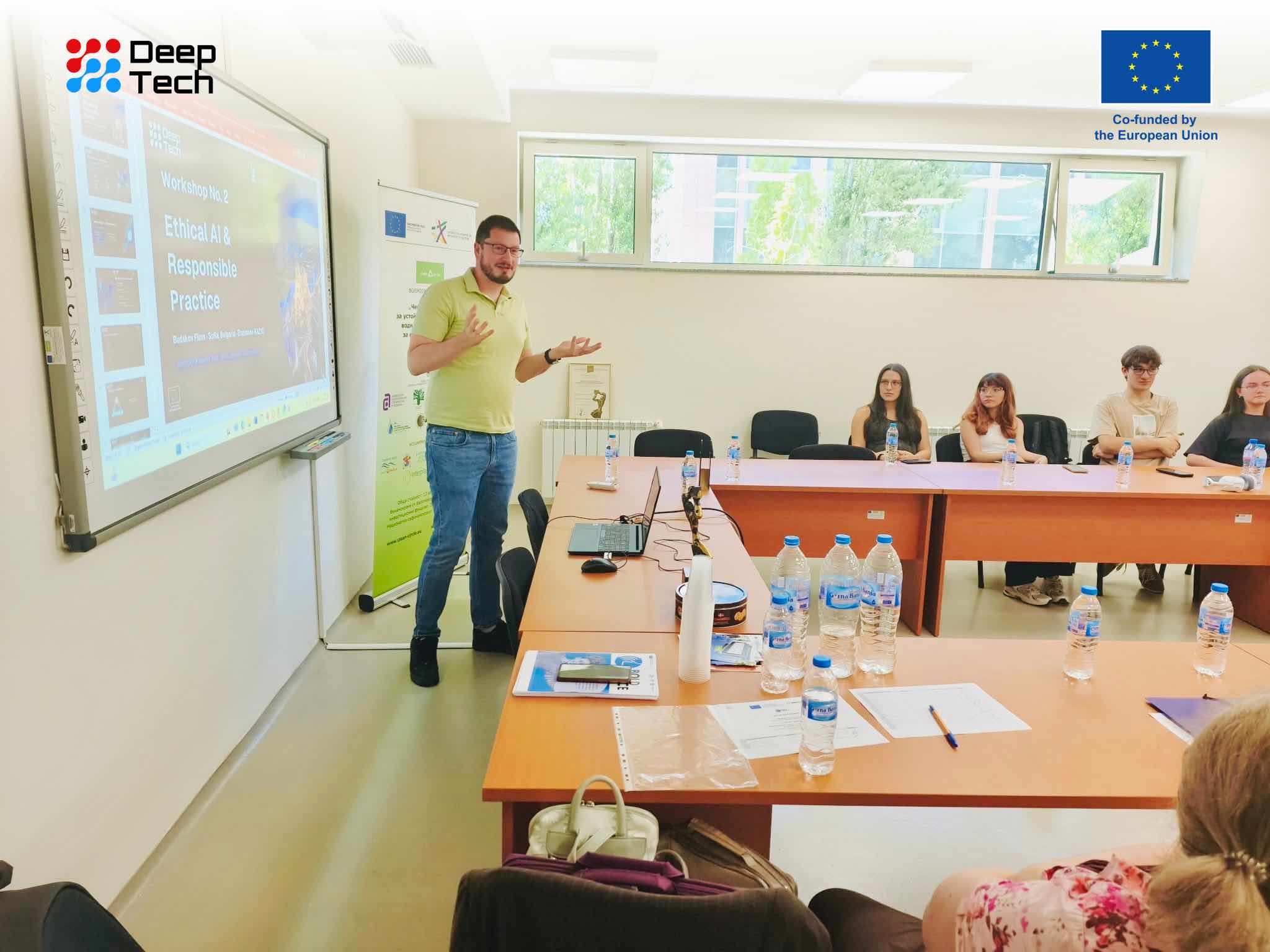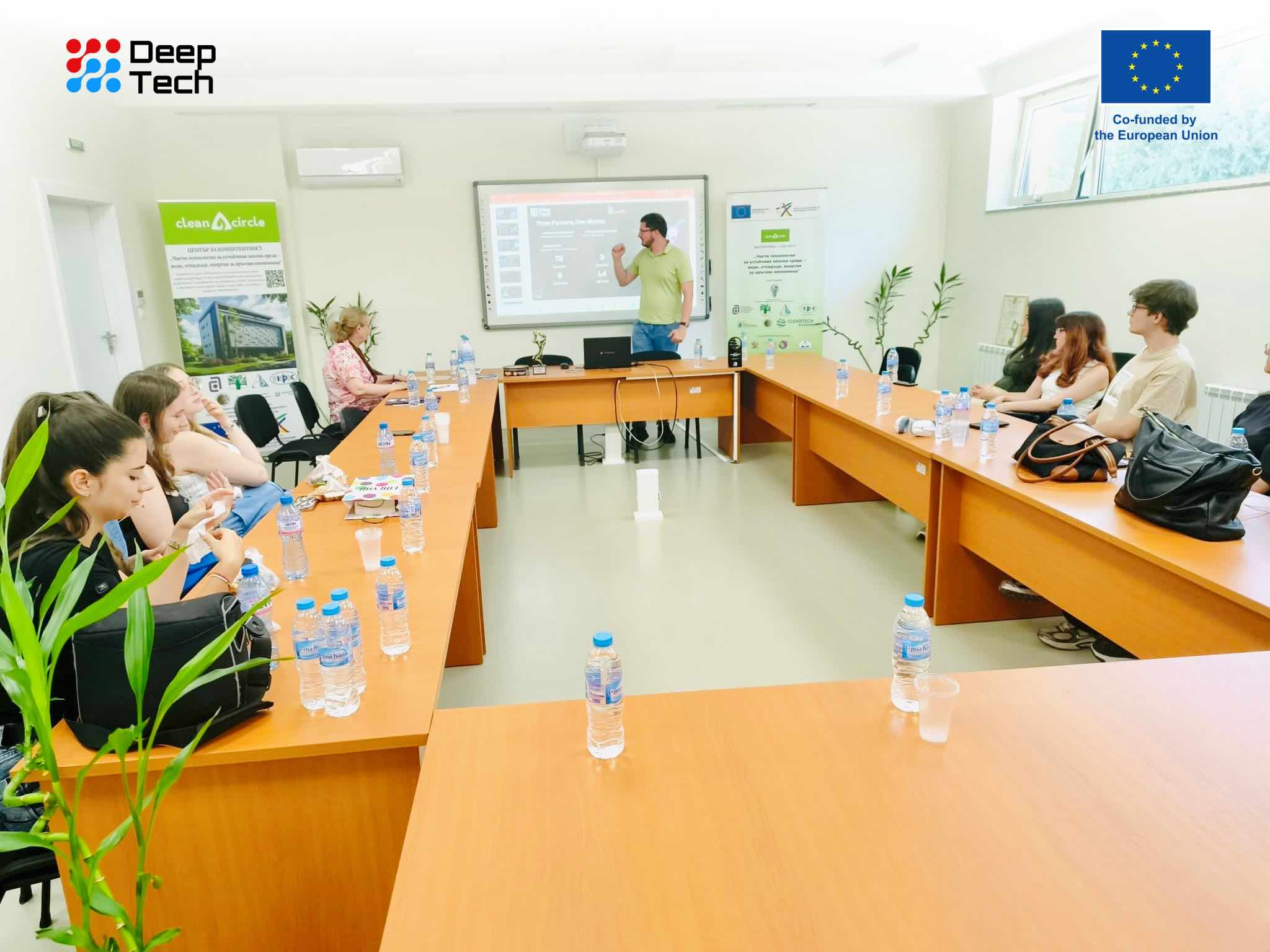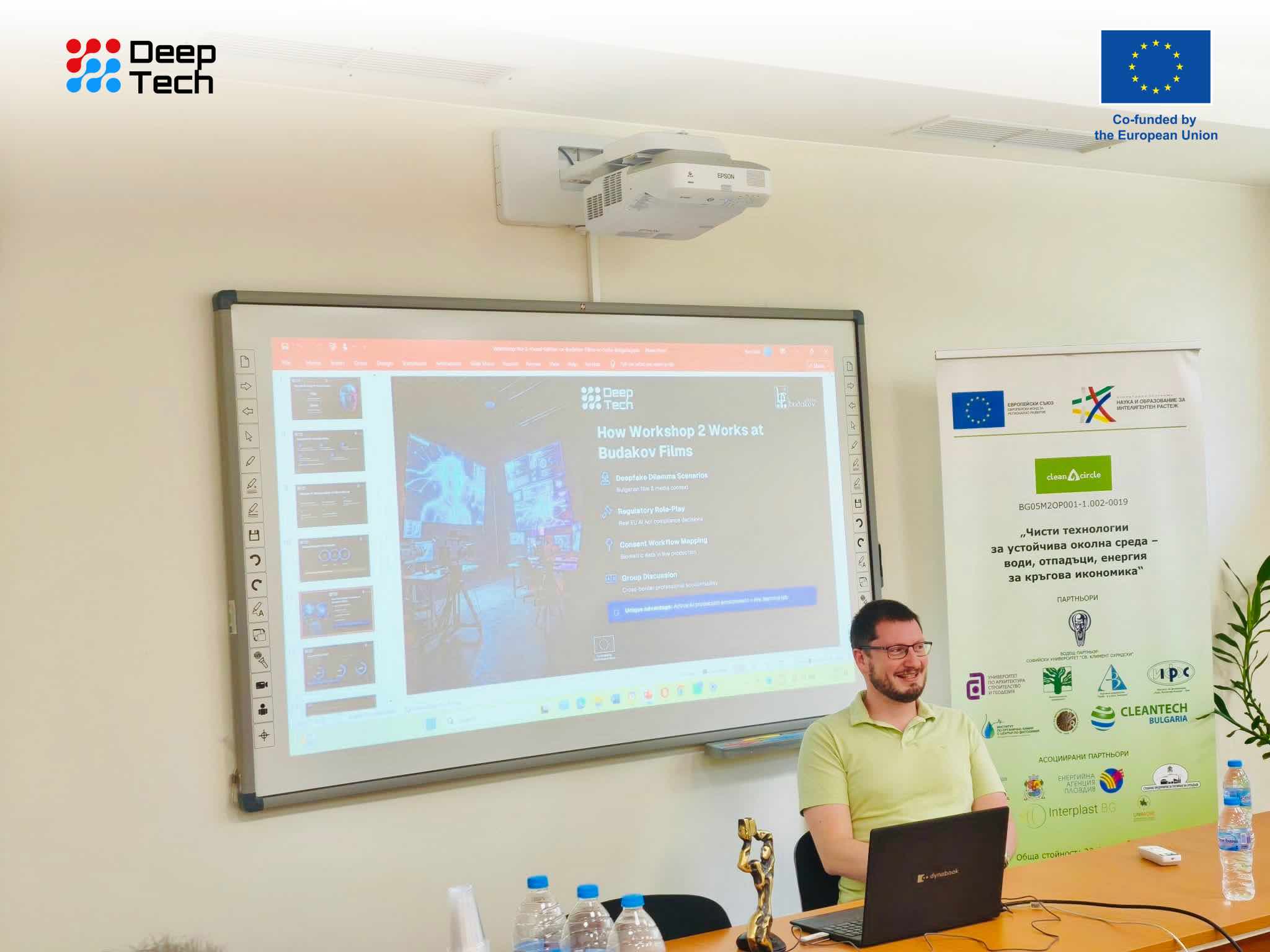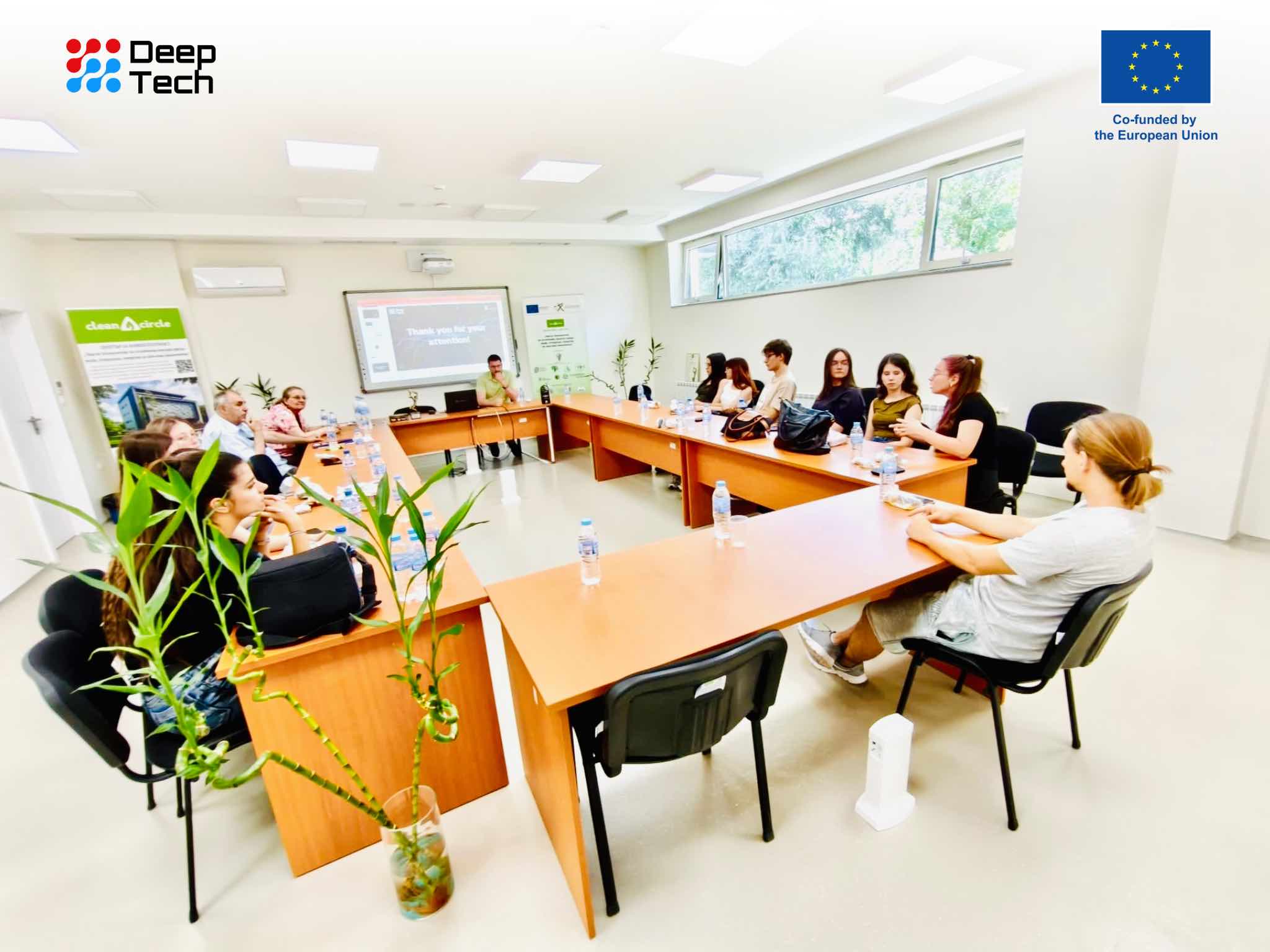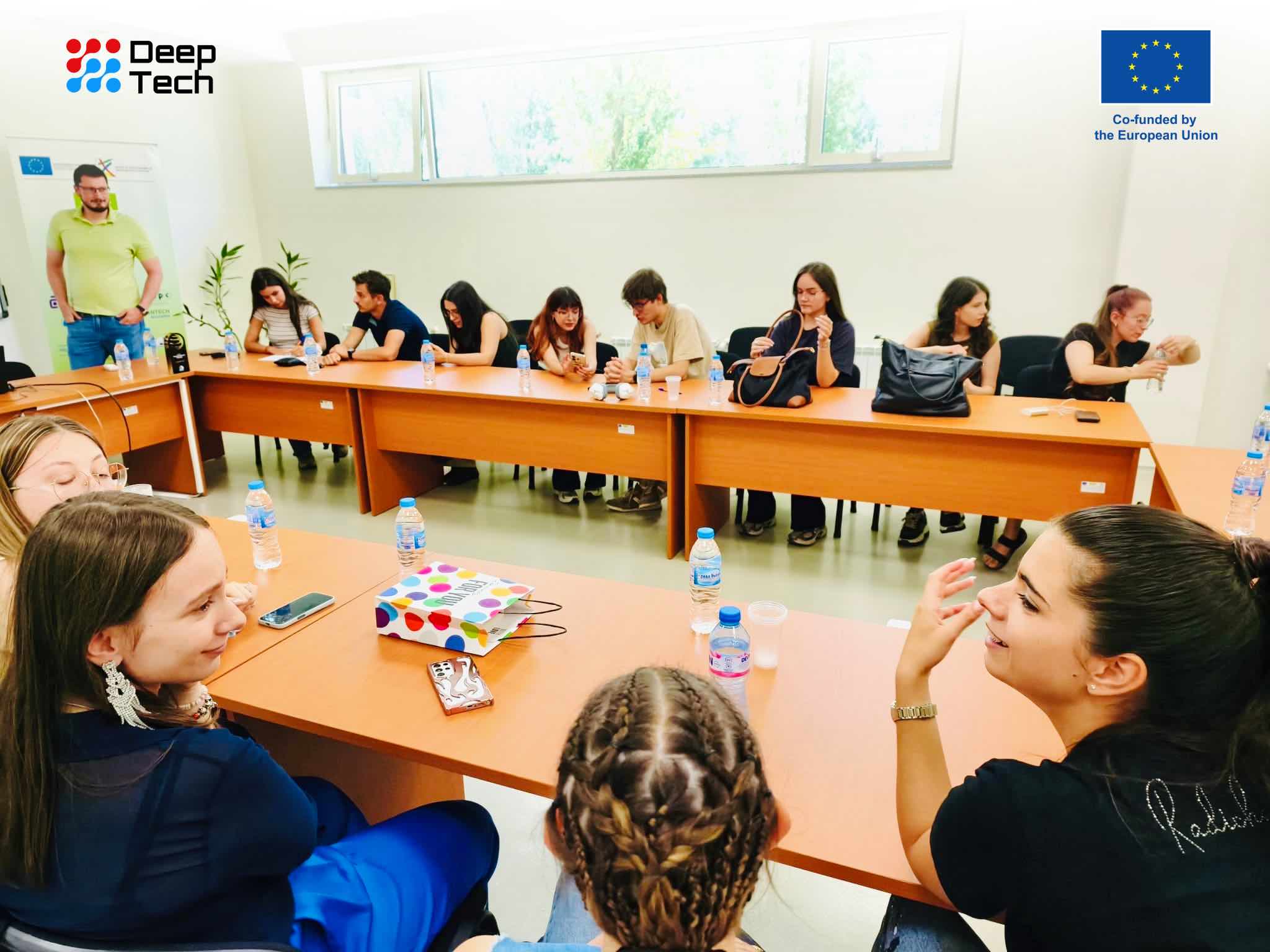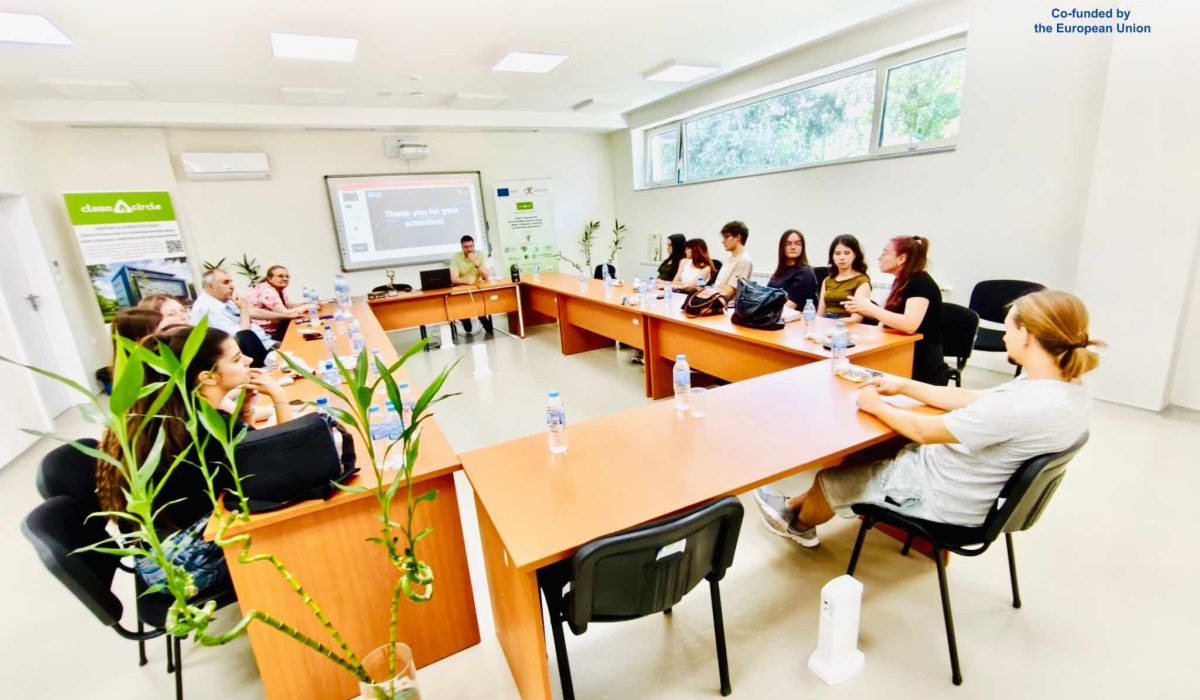
On 23 July, Budakov Films hosted the second pilot workshop of DeepTech for Creative Trust: Countering Deepfakes and Enabling Ethical AI in the Audio-Visual Industry, an Erasmus+ KA210-VET project (Project Nr. 2025-2-LU01-KA210-VET-000371932). The session brought together educators and creative professionals in Sofia to test and validate a core segment of the project’s training programme, continuing a pilot process being run in parallel with partner organisations in Luxembourg and Germany.
About the Workshop Series
The DeepTech for Creative Trust project is developing a training programme to help educators and creative practitioners understand, identify, and respond to the challenges posed by deepfakes and generative AI in the audio-visual sector. As set out in the project’s Methodology for Pilot Workshops and Validation of the Training Programme, the programme is being tested through six pilot workshops, two per partner country, each validating a different segment of the curriculum with a minimum of ten educators per session.
Workshop No. 2 in Sofia was dedicated to the Validation of Ethical, Legal, and Curriculum Integration Aspects, corresponding to Modules 3 through 5 of the training programme. Its purpose was to assess how well these modules translate into applied, ethical, and pedagogical practice for the educators who will ultimately deliver this training in their own institutions.
What Was Covered
The workshop examined three of the programme’s five core competences in depth:
Data Protection and Privacy Management.
Participants explored how AI tools used in creative and educational settings handle personal data, and what responsibilities educators and practitioners carry when introducing these tools into their own workflows.
Intellectual Property and Copyright. Discussion focused on the legal and ethical questions raised by AI-generated and AI-assisted content, including authorship, ownership, and the boundaries of fair use in a rapidly evolving regulatory landscape.
Curriculum Integration. The final segment addressed how these competences can be woven into existing educational and training programmes, giving participants practical frameworks for bringing this material into their own classrooms and professional practice.
Rather than a lecture-style format, the session was built around case-based discussion, hands-on exercises, and collaborative tasks, giving participants the opportunity to apply these concepts to real scenarios rather than encounter them only in the abstract.
Participation and Outcomes
The workshop was planned for a minimum of ten educators, in line with the project’s target for each pilot session. It welcomed twelve participants, exceeding the target by twenty percent and reflecting strong engagement from the local educational and creative community.
Feedback was collected using the project’s structured evaluation framework, which asks participants to assess the relevance, clarity, and practical applicability of the content, the development of their own competences, the quality of the pedagogical approach, and any challenges or gaps they identified. This feedback will feed directly into the refinement of the training modules, course syllabi, and teaching approach ahead of the programme’s full rollout.
Acknowledgements
The workshop was moderated by Dr. Yordan Karapenchev, whose guidance shaped a substantive and wide-ranging discussion among participants. Budakov Films extends its thanks to Dr. Karapenchev and to every participant who contributed their time, questions, and professional experience to the session.
Looking Ahead
The results from Sofia now join the evidence base being gathered across all three partner countries, forming part of a single, standardised validation process for the DeepTech for Creative Trust training programme. This comparative, competence-driven approach ensures that the final curriculum reflects the realities and needs of educators working across different national and institutional contexts.
Further pilot workshops will continue in the coming months as the project moves toward finalising its training resources for educators and creative professionals across the audio-visual sector.
Funded by the European Union. Views and opinions expressed are however those of the author(s) only and do not necessarily reflect those of the European Union or Anefore asbl. Neither the European Union nor the granting authority can be held responsible for them.
Pr. Nr: 2025-2-LU01-KA210-VET-000371932