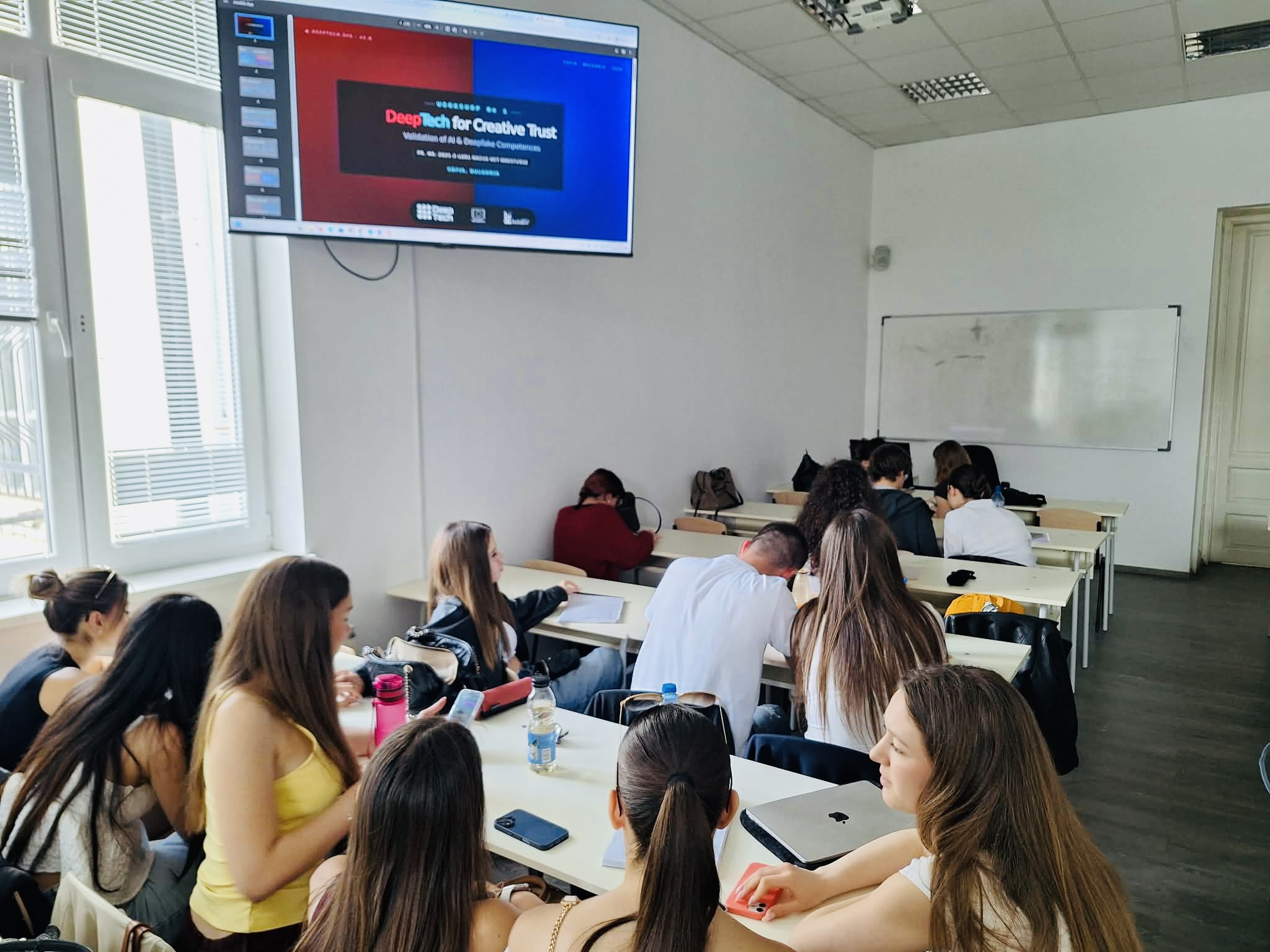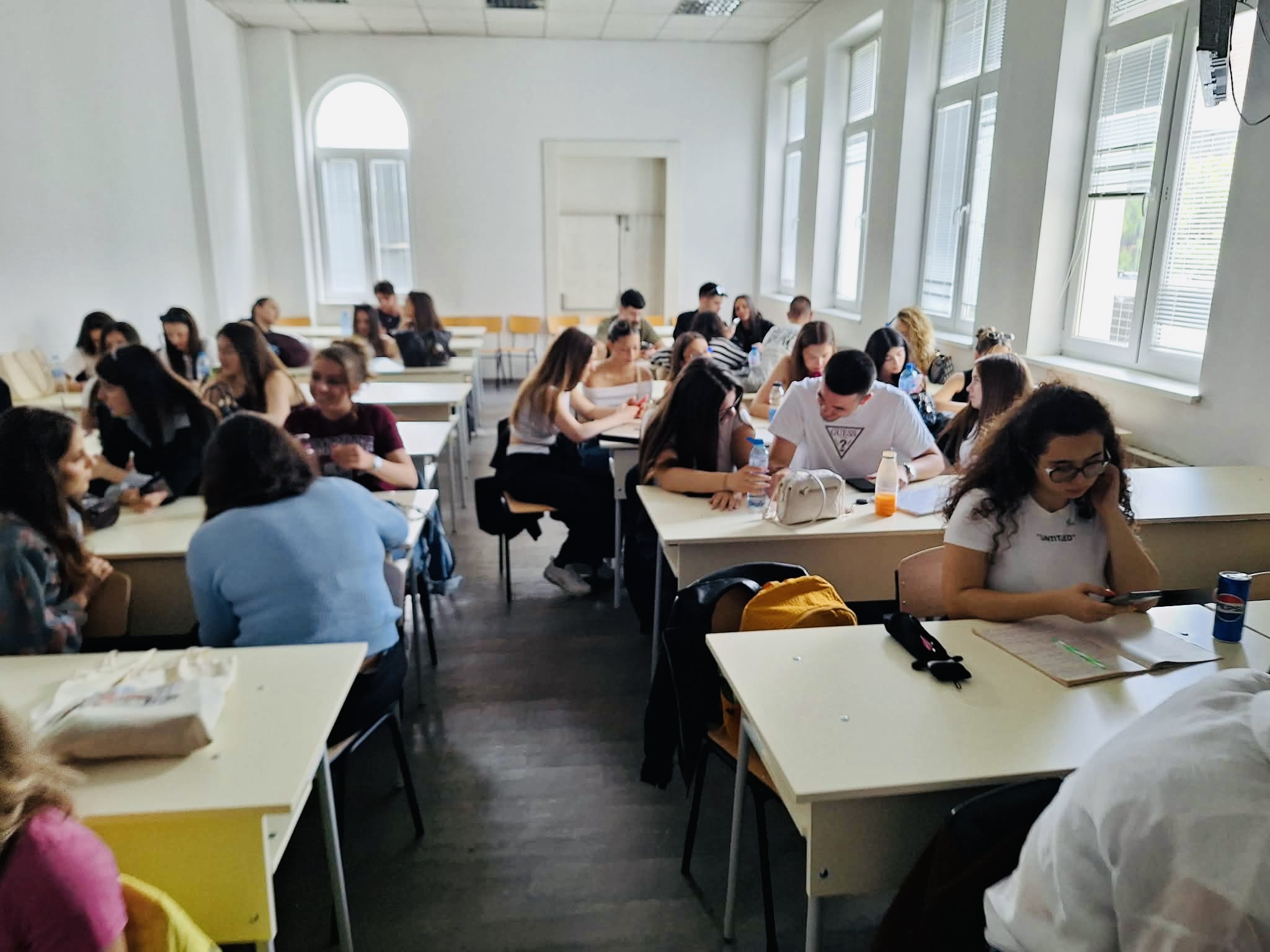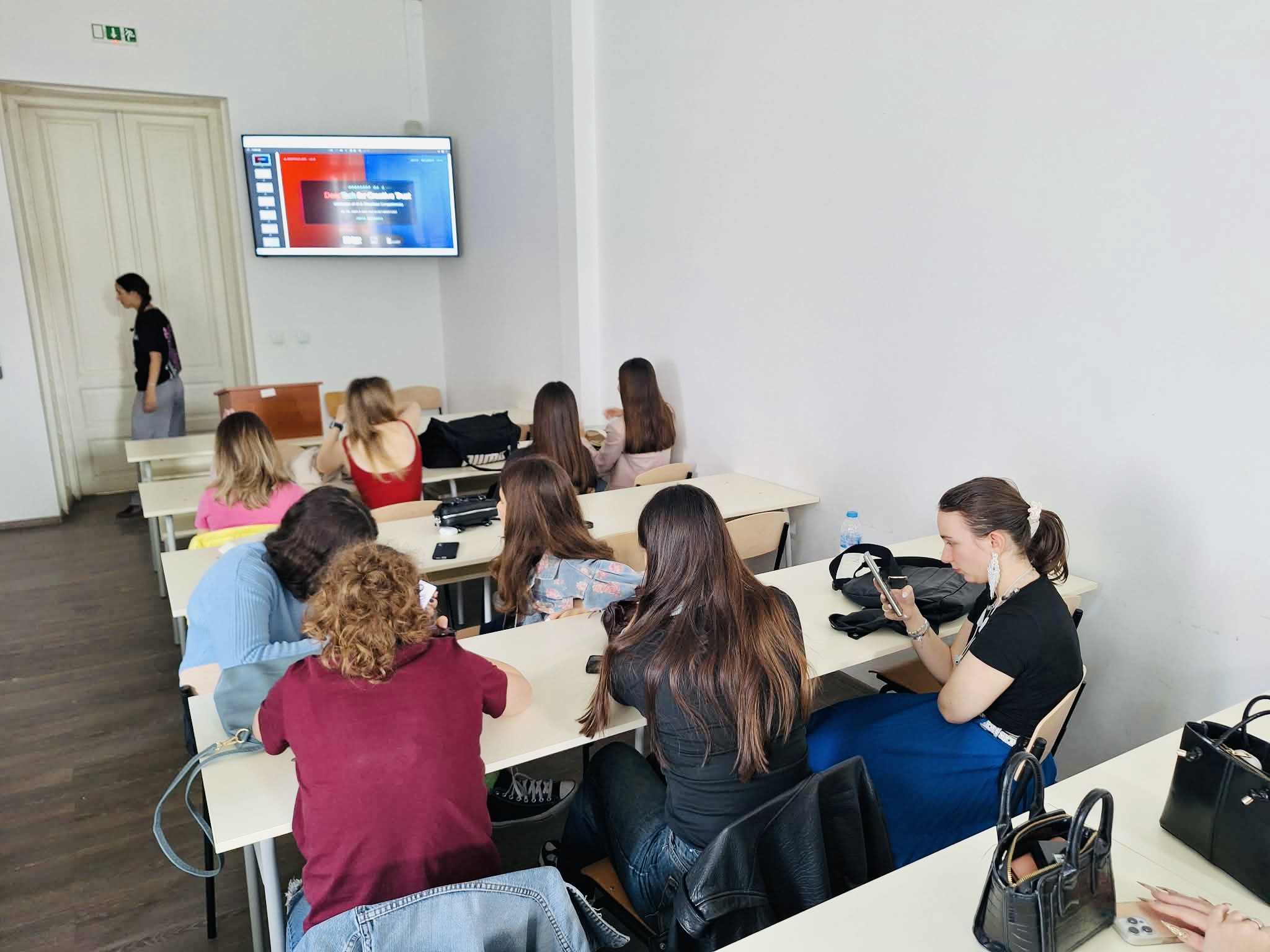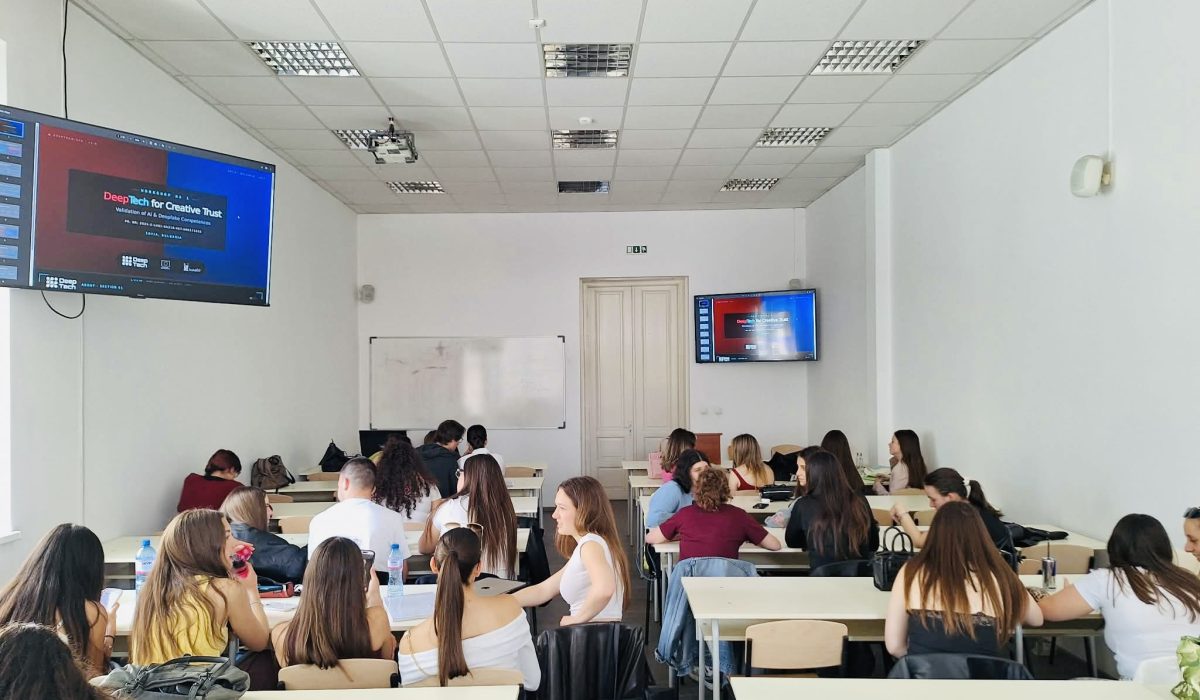
The Erasmus+ co-funded project DeepTech for Creative Trust: Countering Deepfakes and Enabling Ethical AI in the Audio-Visual Industry successfully completed Workshop No. 1 in Sofia, Bulgaria, marking an important milestone in Activity 2 – Piloting and Producing Educator Resources, led by Budakov Films. The workshop represented the first national piloting session in Bulgaria, bringing together educators and professionals from the cultural and creative sectors to validate the newly developed training programme while collecting valuable feedback for its further refinement.
The interactive workshop was organised by Budakov Films and expertly moderated by Dr. Yordan Karapenchev, who guided participants through practical discussions, collaborative exercises, and hands-on exploration of responsible Artificial Intelligence, generative AI, deepfake technologies, and ethical media production.
Building on the work completed during Activity 1, where the consortium designed the six-module training programme “Ethical AI for Creative Trust,” the first workshop provided educators with the opportunity to test the newly developed learning materials in a collaborative and practice-oriented environment. Participants explored practical approaches to using AI responsibly while evaluating how the programme can be effectively integrated into vocational education and higher education settings.
Piloting the “Ethical AI for Creative Trust” Training Programme
Workshop No. 1 forms part of the project’s second major activity, which focuses on validating the six-module EQF Level 4 Training Programme developed during Activity 1. Through six pilot workshops across Luxembourg, Germany, and Bulgaria, the consortium aims to ensure that the educational materials are pedagogically robust, practically applicable, and aligned with the evolving needs of educators working within Vocational Education and Training (VET) and Higher Education (HE).
Participants explored the practical application of the newly developed learning materials while discussing how ethical AI, deepfake detection, transparency, digital trust, and responsible media production can be integrated into existing curricula and professional practice.
Throughout the workshop, participants actively contributed recommendations for improving the learning resources, ensuring that the final outputs reflect real educational needs and contemporary developments in the creative and audio-visual industries.
Strong Engagement and Collaborative Learning
The workshop was characterised by a highly interactive learning environment that encouraged dialogue, peer exchange, and collaborative problem-solving.
Educators representing different professional backgrounds discussed real-life scenarios involving synthetic media, analysed current AI challenges affecting creative industries, and exchanged practical ideas for integrating ethical AI competences into teaching and learning.
The collaborative format enabled participants not only to evaluate the training materials but also to contribute directly to their future enhancement, reinforcing one of the project’s core principles: co-creation between educators, researchers, and creative industry professionals.
Contributing to the Project Objectives
Workshop No. 1 directly supported all three strategic objectives of the DeepTech project:
strengthening educators’ competences in recognising, analysing, and countering deepfakes and synthetic media;
enabling educators to integrate ethical and responsible AI practices into their own teaching methodologies;
promoting cross-border collaboration and innovation in creative education through competence-based learning resources.
By testing the training programme in an authentic educational environment, the workshop generated practical evidence that will contribute to the continuous improvement of the project’s course syllabi, teaching methodologies, and explanatory educational videos.
Delivering the Expected Results of Activity 2
The successful completion of Workshop No. 1 contributes directly to the tangible outputs foreseen within Activity 2, including:
- validation of the six-module Training Programme;
- refinement of competence-based course syllabi;
- collection of structured participant feedback;
- development of a transferable workshop methodology;
- production of evidence supporting the final Workshop Validation Report.
These outcomes will support the creation of high-quality educational resources that can be transferred across European VET and Higher Education institutions.
Quality Assurance and KPI Achievement
An important component of the workshop was the implementation of the project’s quality assurance methodology.
Following the session, participants completed a structured evaluation survey measuring satisfaction, relevance, applicability, learning impact, and opportunities for further improvement. Their feedback will be incorporated into the continuous refinement of the training programme and accompanying educational resources.
The workshop contributes directly to achieving several key performance indicators established in the Erasmus+ project proposal, including:
- active piloting of the Training Programme through national workshops;
- collection of structured participant feedback to support continuous improvement;
- strengthening educators’ competences through practical application of the learning materials;
- validation of pedagogical quality, inclusiveness, and transferability of the developed resources;
- supporting the project targets of achieving at least 85% participant satisfaction, 90% completion of pilot workshops, 90% positive expert validation of pedagogical quality, and the collection of at least 15 actionable recommendations per country to enhance the final educational resources.
Looking Ahead
The successful delivery of Workshop No. 1 demonstrates the strong commitment of the DeepTech consortium to developing practical, innovative, and ethically grounded educational resources that strengthen trust in digital media and prepare educators for the rapidly evolving AI landscape.
The insights gathered in Sofia will now feed into the further refinement of the project’s training programme before the remaining national workshops are delivered across the partner countries. Through this collaborative European effort, the consortium continues to build sustainable educational resources that promote responsible Artificial Intelligence, media literacy, and ethical innovation throughout the cultural and creative sectors.
Funded by the European Union. Views and opinions expressed are however those of the author(s) only and do not necessarily reflect those of the European Union or Anefore asbl. Neither the European Union nor the granting authority can be held responsible for them.
Project Number: 2025-2-LU01-KA210-VET-000371932